
Social Media and The Effect on Youth

Social media has become more intertwined with everyday life. Social media has affected every activity in our lives, including our most intimate interactions. Through the news, online platforms such as Facebook, snapchat and Instagram and finally pornography, social media has found away to become an essential part today. This discussion will focus on how social media is affecting the youth of our nations through cultural integration, sexual and non-sexual relationships, and see the productivity or abuse that has occurred through the increasing dependency on social media.
Before there was mass social media disposable at our fingertips, children use to spend more time outside playing with friends, being involved with extracurricular activities or spending quality time with their families. In the journal article Sexual Media and American Youth written by Bobkowsi and Shafter we can see that is no longer the case. “The average American youth spends more time using media on a daily basis than she does attending school or interacting with parents and family. (108 Bobkowski, Shafer) This quote is showing hoe society is moving away from the traditional social norms of being family oriented and connecting with people in person and moving towards a new social normal of being or isolated and connecting with people you may never have met before through social media. The journal Article also covers the exposure of sexual media to the youth. “Since youth engage with media differently across media platforms and exposure contexts, the effects of sexual media exposure tend not to be direct or uniform among individuals exposed to the same sexual content. (109 Bobkowski, Shafer) the authors are trying to get across that there is so much sexual content out their on social media that there is physically no possible way to block it or prevent the youth from experiencing sexual behavior at an earlier age then normal due to the easy access on social media plats forms. This quote also represents that because these sexual sites are individualized that it is hard to see the side effects that these sites have had on the youth in recent years.
Social media has undeniably impacted the norms of relationships and in a way have created a whole new wave of social norms through social media. The author of the journal article social media and social relationships focus more on how social media has effected the social norms of China “The dynamism of Chinese social media is truly impressive. Even more impressive, however, is the speed of response of Chinese social media users. They pick up almost instantly on each subtle gesture and movement allowed by social media, and skillfully apply these to navigate their relationships with families, friends, romantic partners and even with strangers online. A whole set of social norms have emerged regarding the use of social media, which people soon take for granted: social media thus comes to feel an essential part of their daily lives, as if it had always been with them.” (97 Wang) Although the author is forcing more on China throughout his writing it still relates back to cultures that allow countries to be strongly affected by social media. For instant the author is talking about how social media users are picking up gestures and applying them to the social life, that is not just happening in china but all over the world. All over the world people are using emojis, snapchat filters and post to show how they are feeling, and friends and families react to the things they see to connect with one another. “In practice, being connected is one thing: keeping in touch is another. In fact mere gures of the distribution of various contacts do not tell even half the story.”(Wang 100) Years ago, friends would all need to be near one another to hangout that is no longer the case with skype you can see and talk to your friends all over the world and keep a health and positive romantic or platonic friendships.
In the journal article Social Media through ethnography by Jolyanna Sinanan she discusses what truly drives a person and why they feel so connected to social media. “An anthropological approach to social media instead takes into account the context in which individuals are embedded. It also considers that the norms around what a given individual makes visible are driven by culture and society itself. Such a holistic approach differs from a psychological perspective which might claim that what we witness from a person’s surface, including what they post on social media, is the product of individual drives or the ego.” (Sinanan 200) because of social media people are developing bigger egos and feel like everyone is interested in what they have to say or what they have to post because often once someone posted something, they generally reactive likes, dislikes or positive or negative comments on their post. These interactions generally increase the person ego because it makes them feel important which is why some people are driven to post everything, they eat either on Facebook or social media because it gives them an outlet to let their voice be heard. Social Media has the power to give a person great confidence within themselves however Sinanan realizes it also could tear down a person and make them venerable through cyberbullying and social media attacks. For example, Sinanan states “recessions were that young, university-educated women were deterred from (or at least thought twice about) entering professions that involve being in the public eye, especially those involved with the law, activism and governance issues. “(204-205 Sinanan) this quote shows that social media gives others the power to deter other from chasing their dream. In the example Sinanan uses social media is used to keep women out of the public eye. The negative comments and constant building from social media can be so strong that it causes one to stop believing in themselves. Based on the work Social Media through ethnography by Jolyanna Sinanan do you believe social media does better for society or does more damage to society? And when it comes to women what do you think Jolyanna Sinanan is in favor of social media or against it?
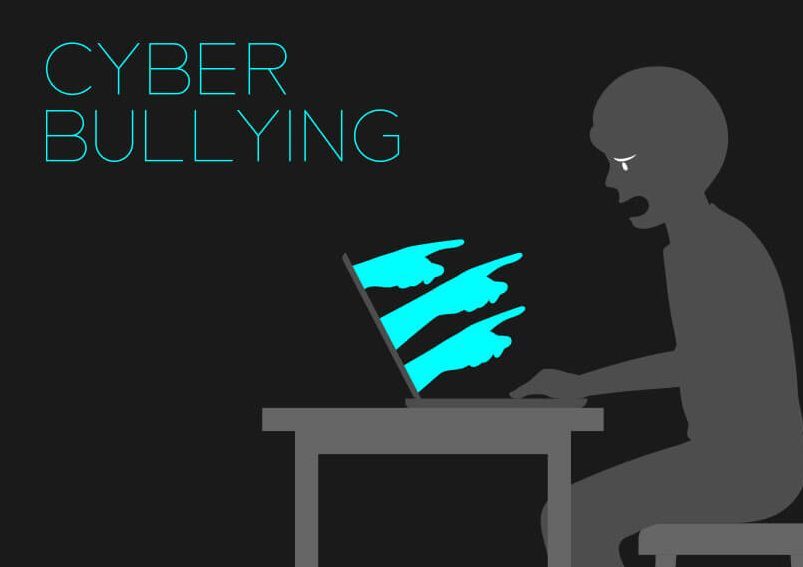
In our next topic about social media we will discuss how it is affecting kids at school. There was a time were students in middle schools and highs school were taught about drug edition and how to keep your life on the right track, although schools still have those very important educational seminars. Social media has created another risk for children and young adults that school distracts now have the need to include cyber-security education. In the journal article Middle School Students Social Media the author talks about the dangers of social media and how kids are talking to stranger online which is the cause for these cyber-security education classes “A total of 593 middle school students were surveyed about digital footprints and concerns about social media. The results show that 17% started using social media at age nine or younger, 40% accepted friend requests from people they do not know, and 40% reported that their parents did not monitor their social media use, which calls for the needs of cyber-security education. “(213 Martin) The survey results gives us shocking information that 40% of kids are unmonitored by their parents, they are free to do what ever they like on their phones and computers, even talk to strangers as the survey also shared that 40% of the students surveyed accept friends requests from people they do not know. The author will go into more studies to show how social media has more of a social risk on the youth growing up. “Social media use presents several societal risks for middle school and high school students. Many have expressed concerns that this use may have negative impacts on various areas of teenage life. This was supported by a study that indicated that Internet use as little as three hours per week could lead to depression and social isolation in teenagers” (Kraut, Patterson, Lundmark, Kiesler, Mukopadhyay & Scherlis, 1998). (214 Martin ) As previous stated in Bobkowski and Shafer works Sexual Media Youth kids are using social media more then they talk to their families or attends school, shows that the youth is using social media more then 3 hours a week. According to this survey over three ours a week can lead to depression and social isolation of teenagers. As a society we are seeing more and more teens stay in side rather then going outside and play with their friend, we are seeing a whole new social norm where kids are use to making friends through Xbox and talking to someone hundreds of miles away and they considers these strangers their true friends. The study also talks about how students are more likely to lead to depression if they spend more then three hours on social media thus his highly due to cyber-bullying once a kid leaves school he can no longer get away from their attackers even at the safety of his own home. “Cyber bullying takes place when someone deliberately upsets or harasses someone else repeatedly using online or mobile technology. Signs of cyber bullying are when kids harass or embarrass others publicly, spread rumors, post hurtful information or images online, or say mean things that humiliate others in public. The effects of cyber bullying on students can lead to depression, thoughts of violence, and even suicide” (Ahn, Bivona, & DiScala, 2011; Al-Khateeb, & Epiphaniou, 2016). (215 Martin ) This gives us a clear definition of cyber bullying and can show the effects it has on our youth. Children are so tormented and harassed through social media that it seems like there is no possible escape that they unfortunately end up taking their own life to stop the pain and suffering from social media.
When it comes to radicalization and social media there are two types of extreme one which is beneficial to society and other that is used for distraction and terrorism. In the journal article Radicalization and the Use of Social Media the author states “Social media is an effective tool to use to radicalize and recruit members into a cause. It is always there whenever the user is. It lures its users with a promise of friendship, acceptance, or a sense of purpose” (168 Thompson) this is what terrorist groups use to attract individuals to their organization. Terrorist groups pray on the weak that are isolated and looking for purpose in their lives. From yours of being isolated from society and longing for a friendship terrorist groups promise individuals this feeling of being important and giving them a sense of a family when all they really want is to cause pain and destruction to communities. This is just one example of how a radical group can affect the public to cause a lot of damage through social media, However the author then goes on to talk about the good that can come from the social media plat forms that will help improve our community and save lives. “High profile individuals use social media to rally support for their causes, and a combination of social media applications to market themselves. Actor and philanthropist, Ashton Kutcher, who was an early Twitter user, has 6.8 million followers and frequently updates his followers on his initiatives, social activities, and his nonprofit organization with Demi Moore, The DNA Foundation, which works to end human trafficking and child- sex slavery. (170 Thompson) This quote shows that celebrities and that people who have a strong public present in our community can use their social status and social media to raise awareness on certain issues to better improve our society. In this example Demi Moore and Ashton Kutcher, us their high profile and social media plat forms to spread news of their non-profit organization to over 6.8 million people to raise awareness and try to prevent human trafficking and child-sex-slavery. Reading this Journal article do you believe more harm or good comes from the radicalization of social media?
Social Media can be a powerful tool to bring pain into induvial lives, however when used in moderation and in the right hands social media can have a beneficial impact on its community. As stated in Social Media and Kids Today: A Counter-Narrative from Us High school “In opposition to the often-depicted solitary, lonely teen, emotionally crippled by social media use, media can actually create strong community ties in positive ways that cut across gene. “(44 Kist) the author acknowledges the pain and suffering that can come from social Media but at the same time realizes the social benefit. Social Media can be used to bring people closer together through advertisement of a social event such as a public concert where people from different towns gather from all over just to be in the same place as one another and show their support to their local communities. Another way social Media makes us stronger as a community is when a natural disaster occurred social media can be used to raise awareness and people from all over the country will wither donate to help the victims or people will even go to the natural disaster and build new homes and try to saves lives if they can.

In Conclusion there are a lot of negative and harmful ideas that can come about from social media plat forms that can effect our youth as a nation, however if we are able to keep track of how much time we spend on social media as a family it can have some great impact on society as a whole. If we have a society can find a balance between social media and spending time outdoors and doing physical activities as well as spending more quality time with friends and family, there are endless possibilities we can achieve with social media. But through this discussion we can see we are drifting away from the social norms of being family oriented and becoming more self-centered. Do you believe that we as society should cut yourself off from social media or should we keep using social platform as we currently are?
Below are five links to give a better understanding of how social media can affect us both positively and negatively. I have label each link with either a pro or con or pro and con to give you an idea of what the article will be focusing on before you read the article.
https://www.lifewire.com/advantages-and-disadvantages-of-social-networking-3486020 (Pros and Cons)
https://www.searchenginejournal.com/social-media-business-benefits/286139/ (Pros)
https://www.compukol.com/the-health-benefits-of-social-media/(Pros)
https://www.makeuseof.com/tag/negative-effects-social-media/ (cons)
Video is inside this article
https://carrierclinic.org/resources/good-bad-in-between-of-social-media/
Reference Page
BOBKOWSKI, PIOTR, and AUTUMN SHAFER. “Sexual Media and American Youth.” Children, Sexuality, and the Law, edited by Sacha M. Coupet and Ellen Marrus, NYU Press, 2015, pp. 108–132. JSTOR, www.jstor.org/stable/j.ctt15r3zmf.9. 108, 109
“Social Media and Social Relationships.” Social Media in Industrial China, by Xinyuan Wang, 1st ed., vol. 6, UCL Press, London, 2016, pp. 97–126. JSTOR, www.jstor.org/stable/j.ctt1g69xtj.9. Pg 97,100
“Conclusion: Social Media through Ethnography.” Social Media in Trinidad: Values and Visibility, by Jolynna Sinanan, vol. 11, UCL Press, London, 2017, pp. 199–208. JSTOR, www.jstor.org/stable/j.ctt1xhr53j.11. 200,204,205
Martin, Florence, et al. “Middle School Students’ Social Media Use.” Journal of Educational Technology & Society, vol. 21, no. 1, 2018, pp. 213–224. JSTOR, www.jstor.org/stable/26273881.pg 213, 214 ,215
Thompson, Robin. “Radicalization and the Use of Social Media.” Journal of Strategic Security, vol. 4, no. 4, 2011, pp. 167–190. JSTOR, www.jstor.org/stable/26463917. Pg 168, 170
Kist, William, et al. “Social Media and ‘Kids Today’: A Counter-Narrative from a US High School.” The English Journal, vol. 104, no. 3, 2015, pp. 41–46. JSTOR, www.jstor.org/stable/24484455. Pg 44



 SOCI130_The_Family